
The Science of Flavor: Exploring Molecular Gastronomy
Presentation
Sub-atomic gastronomy is an innovative approach to cooking that merges the artistry of culinary creativity with the precision of science. Over recent decades, this field has brought new techniques and technologies into the kitchen, altering our perceptions of food, flavors, and textures. It challenges traditional cooking practices by utilizing scientific principles to control food at the molecular level.
At the core of sub-atomic gastronomy is the idea that cooking isn’t just about flavor—it’s about understanding how ingredients interact at a chemical level and how these interactions affect taste, texture, and presentation. The result is a form of cooking that can surprise, delight, and sometimes even bewilder diners with new textures, flavors, and experiences that were once thought to be impossible.
This article will delve into the science behind sub-atomic gastronomy, its techniques, its applications, and its impact on both professional kitchens and home cooking. We will explore how chefs use knowledge of science and physics to create novel dishes that challenge our understanding of food. Furthermore, we will examine how molecular gastronomy enhances flavor perception and how its principles are applied in contemporary cooking at some of the world’s most renowned restaurants.
Part 1: The Underpinnings of Sub-atomic Gastronomy
1.1 What is Sub-atomic Gastronomy?
Sub-atomic gastronomy, a term coined by scientists Hervé This and Nicholas Kurti in the 1980s, refers to the study of the physical and chemical processes that occur during cooking. While it has evolved into a popular culinary movement, it originally emerged from a desire to understand the science behind food preparation. The goal was to explore new cooking techniques as well as to explain why certain ingredients behave the way they do during cooking and how these behaviors can be controlled or altered.
Though it shares similarities with other cooking approaches, sub-atomic gastronomy goes beyond traditional methods. It involves breaking down ingredients into their molecular components and then using scientific tools—such as centrifuges, liquid nitrogen, and dehydrators—to manipulate those components in ways that traditional cooking cannot.
1.2 History and Beginnings of Sub-atomic Gastronomy
Sub-atomic gastronomy grew out of the work of scientists and physicists who were fascinated by food and its behaviors under different conditions. In the 1980s, Hervé This, a French chemist, and Nicholas Kurti, a Hungarian-born physicist, began collaborating on experiments that investigated the science behind cooking. They wanted to understand why foods behave the way they do when exposed to heat, cold, pressure, and other environmental factors.
Initially, sub-atomic gastronomy was not widely accepted in the culinary world, but as its techniques and potential applications became better understood, it began to influence the work of avant-garde chefs. The movement really gained momentum in the 1990s, when chefs like Ferran Adrià, René Redzepi, and Heston Blumenthal embraced these principles and began incorporating them into their restaurants.
As these chefs began to experiment with the techniques of sub-atomic gastronomy, they developed new ways of preparing food that transformed the dining experience. They learned how to create foams, gels, and liquids that could mimic solid textures, how to manipulate flavor profiles using molecular techniques, and how to present food in entirely unexpected ways.
Part 2: The Study of Flavor
2.1 The Four Fundamental Tastes: Sweet, Sour, Bitter, and Umami
When we talk about flavor, we often think of the combination of taste and smell. The science of flavor is rooted in the way our sensory systems interpret and process the chemicals in food. There are five basic tastes that the human tongue can detect: sweet, sour, salty, bitter, and umami.
- Sweetness is commonly associated with sugars and signals the presence of energy-rich foods.
- Sourness is often a sign of acidity, which can help us determine if a food is ripe or spoiled.
- Bitterness is typically a sign of toxicity or potentially harmful substances, although many bitter foods can also have health benefits.
- Saltiness is related to the presence of salt and plays a key role in balancing flavors.
- Umami is a savory taste, often found in foods that contain glutamates, like meat, cheese, and some vegetables. It has a deep, satisfying quality that enhances other flavors.
Sub-atomic gastronomy relies on understanding how these tastes interact and how the components of food can be altered to enhance or modify the way they are perceived by the human senses.
2.2 The Role of Smell in Flavor Perception
While taste is important, the sense of smell plays an even greater role in flavor perception. This is because most of what we perceive as flavor is actually related to aroma. The olfactory system, which processes smells, is directly linked to the brain’s limbic system, the area responsible for emotions and memory. This connection is why a particular smell can trigger vivid memories and emotional responses.
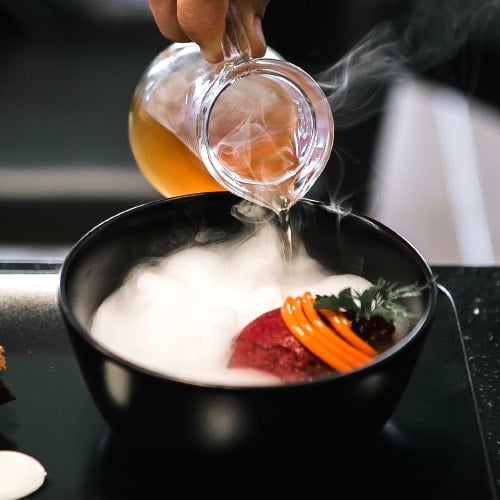
In sub-atomic gastronomy, chefs can manipulate the aroma of food to enhance its perceived flavor. Techniques like infusing scents into dishes using vapors, essential oils, and smoke allow chefs to influence the overall dining experience by creating multisensory encounters.
2.3 The Molecular Basis of Flavor
At the molecular level, flavor is determined by the specific chemicals present in a food. These molecules interact with taste receptors on the tongue and with olfactory receptors in the nose to create the complex flavors we experience. For example, a compound called vanillin creates the flavor of vanilla, while linalool is responsible for the floral notes in lavender.
Sub-atomic gastronomy focuses on manipulating these compounds in ways that amplify or alter the flavor of food. By using ingredients like molecular distillates or extracts, chefs can concentrate certain flavors or even create entirely new ones.
Part 3: Techniques in Sub-atomic Gastronomy
3.1 Spherification
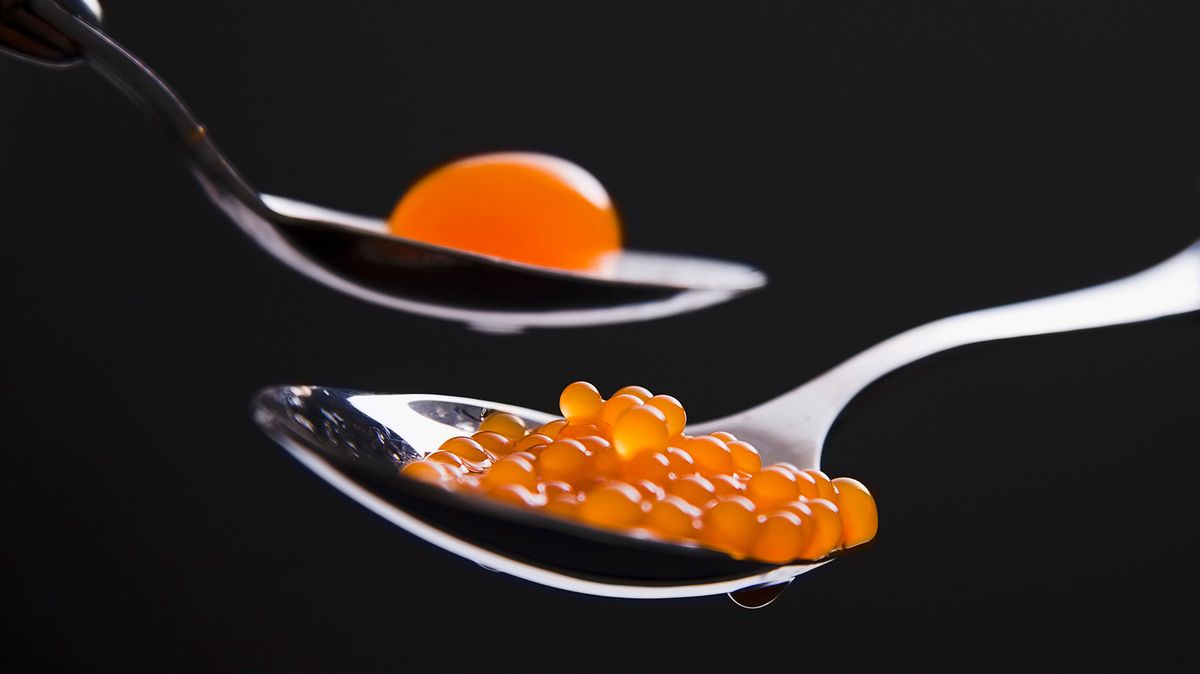
One of the most iconic techniques in sub-atomic gastronomy is spherification. This method involves creating small, gel-like spheres filled with liquids that burst in the mouth and release intense flavors. It’s commonly used to create "caviar-like" beads from juices, alcohol, or purees.
The science behind spherification involves the use of a gelling agent, typically sodium alginate, and calcium chloride. The sodium alginate is mixed with the liquid to be transformed, and the calcium chloride solution is used to form the outer shell of the spheres when the two solutions come into contact. The result is a delicate, liquid-filled sphere that can be used in a variety of dishes, from appetizers to desserts.
3.2 Frothing and Gelling
Sub-atomic gastronomy also makes extensive use of foams and gels. Foams are created by introducing air into a liquid, typically with the use of a siphon or blender. The air bubbles are stabilized using ingredients like lecithin, egg whites, or xanthan gum, resulting in a light, airy texture that can be used to create unique presentations of soups, sauces, or desserts.
Gels, on the other hand, are made by combining liquids with gelling agents such as agar-agar, gelatin, or pectin. These gels can take on a wide range of textures, from firm to delicate, and are often used to create modern interpretations of traditional dishes or to transform the presentation of ingredients.
3.3 Sous-Vide Cooking
Sous-vide, meaning "under vacuum" in French, is a technique that involves cooking food in a vacuum-sealed bag at a precise low temperature for an extended period. This method allows chefs to achieve perfect doneness while preserving moisture, flavor, and nutrients. By cooking food at low temperatures for hours or even days, sous-vide can result in textures and flavors that are impossible to achieve through traditional methods.
The precision of sous-vide cooking allows sub-atomic gastronomists to fine-tune flavors and textures, ensuring that the food is cooked consistently every time. This method has become a staple in high-end kitchens and is now making its way into home kitchens as well.
Part 4: The Impact of Sub-atomic Gastronomy on Dining
4.1 Innovative Presentations
One of the most exciting aspects of sub-atomic gastronomy is its ability to change the way food is presented. With techniques like spherification, foaming, and sous-vide cooking, chefs can create visually stunning dishes that surprise and delight diners. These innovative presentations often elevate the entire dining experience, making food not just something to eat but something to experience.
4.2 Sub-atomic Gastronomy in Fine Dining
Top chefs such as Ferran Adrià, Grant Achatz, and Heston Blumenthal have used sub-atomic gastronomy techniques to push the boundaries of traditional cuisine. Restaurants like El Bulli (formerly led by Adrià) have become known for their avant-garde approach to food, offering diners not just a meal but a performance. The techniques used by these chefs emphasize creativity, scientific knowledge, and a deep understanding of how food interacts with the senses.
Part 5: The Future of Sub-atomic Gastronomy
5.1 Sustainability and Innovation
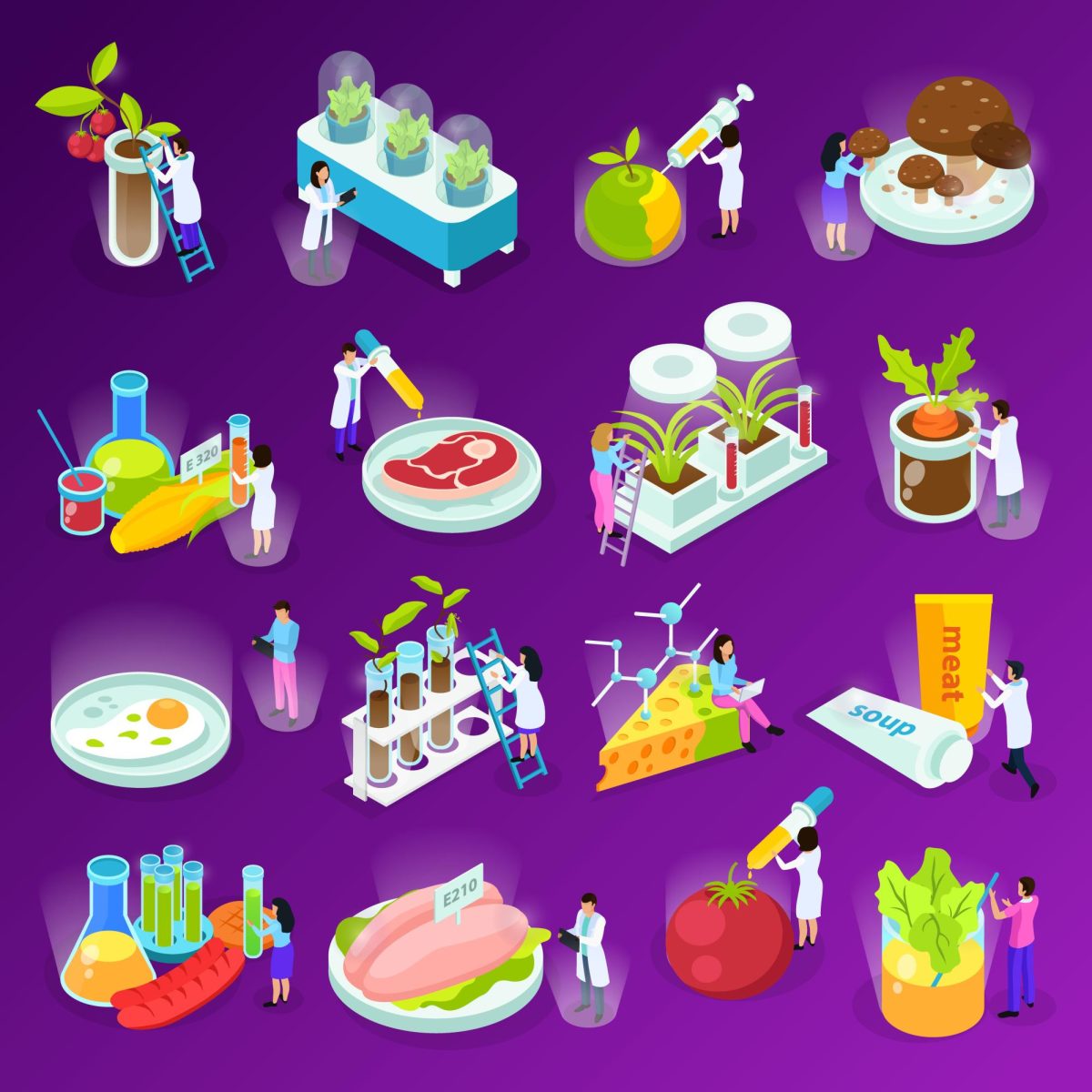
As sub-atomic gastronomy continues to evolve, there is increasing interest in making the techniques more sustainable. Chefs are experimenting with plant-based ingredients, minimizing food waste, and finding ways to incorporate sub-atomic gastronomy into sustainable dining practices.
5.2 The Home Kitchen
While sub-atomic gastronomy was once confined to high-end restaurants, today, home cooks are increasingly experimenting with these techniques. With the advent of affordable tools like immersion circulators for sous-vide cooking, home chefs can recreate some of the magic of sub-atomic gastronomy in their own kitchens.
Conclusion
Sub-atomic gastronomy is not just a trend; it’s a revolution in the way we approach cooking. By blending science with creativity, chefs are transforming food into an art form that engages all the senses. From manipulating the texture and flavor of ingredients to creating entirely new dining experiences, sub-atomic gastronomy has opened up a new world of possibilities for both professional chefs and home cooks. As technology continues to evolve and new techniques emerge, the future of sub-atomic gastronomy promises to be just as exciting and transformative as its past.
0 Comments